
How Many Vegetables Should You Eat a Day?
Most adults need about 2.5 cups of vegetables a day, or around three 80 g portions within the NHS 5 a day. Here is what that looks like on a plate, and what counts.
By Wellmarrow Editorial Team · Nov 3, 2026 · 7 min read · 4 sources cited
Key takeaways
- 1Most adults need about 2.5 cups of vegetables a day on a 2,000-calorie pattern.
- 2UK advice is five 80 g portions of fruit and vegetables combined; the WHO says at least 400 g.
- 3Frozen and canned vegetables count; juice counts as one portion at most.
- 4A powder is not a vegetable serving and can only be a top-up on busy days.
- 5People on warfarin or with kidney disease should ask a professional before big changes.
Most adults should aim for about 2.5 cups of vegetables a day, which is roughly 3 to 4 handfuls of cooked or raw produce. In the UK the advice is five 80 g portions of fruit and vegetables combined, and the World Health Organization sets the floor at 400 g a day. The exact number matters less than the pattern: some vegetables at most meals, in more than one color.
How many cups of vegetables is that in real life?
The US Dietary Guidelines work in cup equivalents. At a 2,000-calorie eating pattern they suggest 2.5 cups of vegetables a day. Needs shift with age, sex and activity, so a smaller or less active adult may need a little less and a tall, active one a little more.
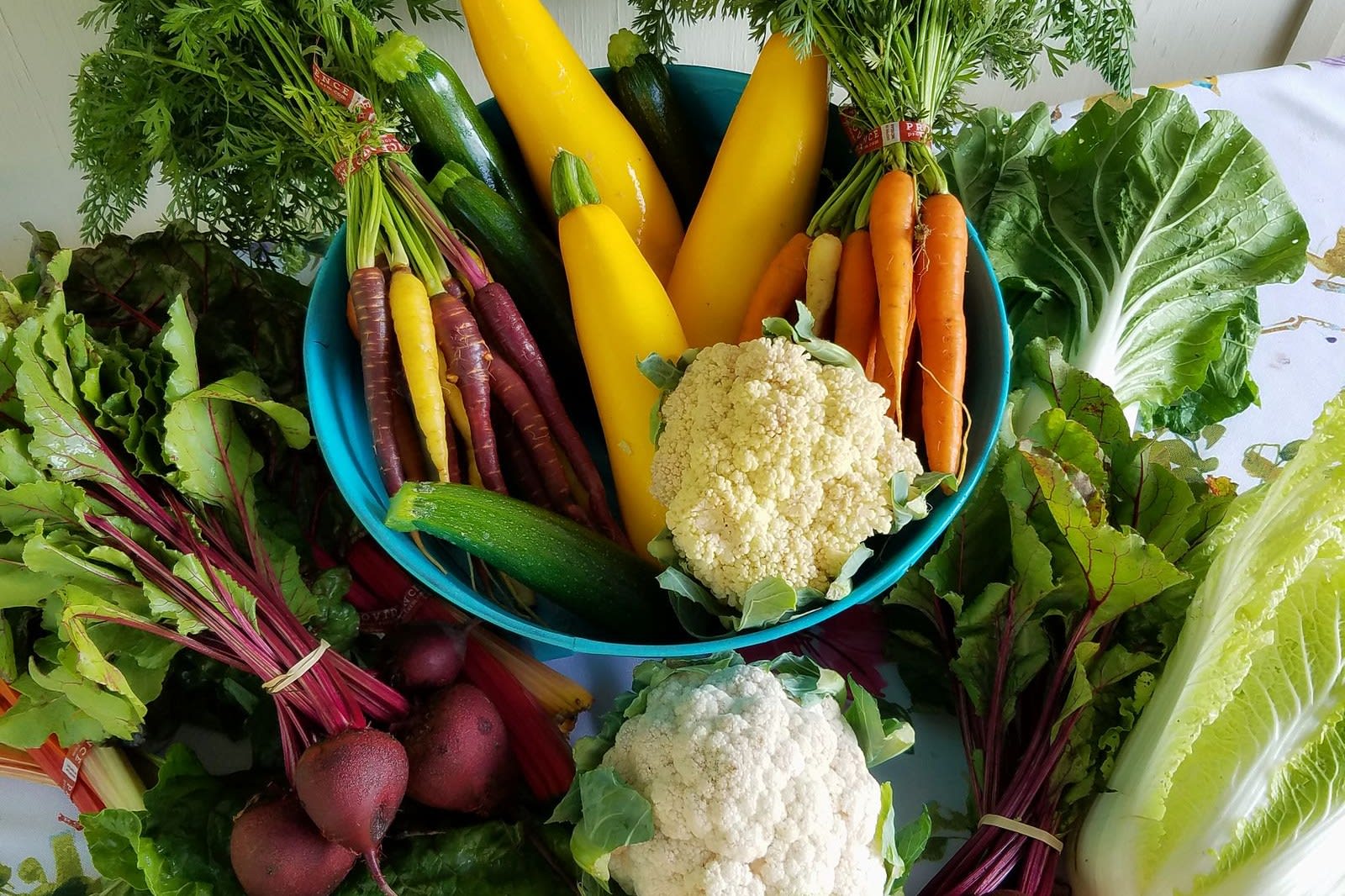
A cup equivalent is easier to picture than it sounds. One cup of chopped raw or cooked vegetables is about the size of a baseball. Leafy greens are bulky, so it takes 2 cups of raw spinach or lettuce to count as 1 cup. A medium carrot, a large handful of broccoli florets or one big sweet pepper each get you most of the way to a cup.
Here is what a normal day might look like:
- Breakfast: a handful of spinach and half a cup of tomatoes folded into eggs (about 1 cup).
- Lunch: a side salad with cucumber and shredded carrot (about 1 cup).
- Dinner: half a cup of roasted broccoli or green beans next to the main dish (about 0.5 cup).
That is 2.5 cups without any special effort, as long as each meal has a plant on the plate.
How many portions is that under the 5 a day rule?
The UK's NHS counts one portion as 80 g, or about 3 heaped tablespoons of cooked vegetables, or a cereal bowl of salad. The 5 a day target covers fruit and vegetables together, so you could eat three portions of vegetables and two of fruit. Many nutrition scientists would rather you lean toward vegetables, because they carry less sugar per bite.
The WHO figure of at least 400 g a day lines up with those five portions. Different bodies use different units, but they land in the same place: a few servings daily, not one.
| Guidance | Amount | What it covers |
|---|---|---|
| US Dietary Guidelines | About 2.5 cups of vegetables (2,000-calorie pattern) | Vegetables only, fruit counted separately |
| NHS 5 A Day | 5 portions of 80 g | Fruit and vegetables together |
| World Health Organization | At least 400 g | Fruit and vegetables together, not counting starchy roots |
Do frozen, canned and juiced vegetables count?
Frozen and canned vegetables count. Frozen produce is usually picked and frozen quickly, so it keeps most of its nutrients, and it is hard to beat for convenience. With canned vegetables, check the label for added salt and rinse them under the tap, which removes some of it.
Beans, peas and lentils count too, and they bring extra fiber and protein. Under the NHS rules they can only make up one portion a day, however much you eat. Potatoes do not count toward 5 a day in the UK because they act more like a starchy carbohydrate on the plate, though other starchy vegetables such as corn and peas are treated differently in US guidance.
Juice is the weakest option. The NHS says a small glass of 150 ml counts as one portion at most, however many glasses you drink, because juicing releases sugars and removes much of the fiber.
What happens if you eat more vegetables?
Large studies that follow people for years consistently link higher fruit and vegetable intake with lower risks of heart disease and early death. These are observational studies, so they cannot prove vegetables are the cause. People who eat more produce also tend to smoke less, move more and eat fewer ultra-processed foods.
The benefits seem to level off. Research summarized by Harvard's Nutrition Source suggests that most of the gain comes from moving from very little to around five servings of fruit and vegetables a day, with smaller extra benefit beyond that. There is no need to chase huge numbers.
Variety adds something too. Dark leafy greens, orange vegetables, cruciferous vegetables like cabbage and broccoli, and alliums like onion and garlic each supply different fibers and plant compounds. Eating the same two vegetables every day misses a lot.
Can a powder replace vegetables?
No. A greens or multi-ingredient powder does not give you the volume, the chewing, the water or the whole-food fiber that vegetables do, and nobody has shown that a powder delivers the same health effects as eating produce. Official guidance counts vegetables, not supplements.
Still, plenty of people have weeks when travel, shift work or a very full schedule pushes vegetables aside. If that is you, a supplement can be a top-up on those days, not a swap. Start with the practical fixes first: a bag of frozen vegetables, a pre-washed salad kit, a soup with extra beans.
If you do want a powder as a safety net, IM8's Daily Ultimate Essentials is one example. It is a single drink mixed with water once a day that packs vitamins, minerals, prebiotics, probiotics and plant extracts, around 90 ingredients in total. The brand was co-founded by David Beckham with the health company Prenetics. Nutrients in a powder are not the same as a serving of vegetables, and a long ingredient list does not prove it does anything extra for your health. It costs money, many people do not need it, and it is no reason to eat fewer vegetables. If you take medication, are pregnant or have a medical condition, check with a doctor or pharmacist before adding it.
How do you fit more vegetables into your day?
Start with the meals you already eat instead of building new ones. Add a handful of spinach to a smoothie, grate zucchini into pasta sauce, or put sliced peppers and cucumber next to a sandwich. Soups, stir-fries and sheet-pan dinners make it easy to get a cup or two in one sitting.
Buying a mix of fresh and frozen cuts waste. Keep the frozen bag for the nights when nothing else gets done. And if you dislike a vegetable, try it roasted or with a sauce before you give up, since texture is often the real problem and not the taste.
People who eat little produce now do better with small steps. Adding one extra serving a day is a realistic goal, and it is worth more than a perfect plan you drop after a week.
Related reading: Are Greens Powders Worth It? What They Can and Can't Do.
When should you see a doctor?
Ask a doctor or registered dietitian before changing your diet a lot if you have chronic kidney disease. Some vegetables, such as spinach, potatoes and tomatoes, are high in potassium, and a limit may apply. People taking warfarin should keep vitamin K intake steady, because leafy greens such as kale and spinach contain a lot of it and sudden changes can affect how the medicine works.
Raising your intake quickly can cause gas, bloating or loose stools, mostly from the extra fiber. Add vegetables gradually and drink water. See a doctor if you have persistent stomach pain, blood in your stool, unexplained weight loss, or digestive symptoms that do not settle after a few weeks.
Check with a professional first if you are pregnant, have a medical condition or take regular medication and are considering any supplement as a top-up.
Frequently asked questions
Is it better to eat vegetables raw or cooked?
Neither is better in every case. Cooking can reduce vitamin C, but it makes some compounds, such as the lycopene in tomatoes and the carotenoids in carrots, easier to absorb. A mix of both is a sensible approach.
Do fruit and vegetables count the same?
For the 5 a day rule they are added together. The US guidelines list them as separate groups, with about 2 cups of fruit a day in the 2,000-calorie pattern, so vegetables are not a replacement for fruit or the reverse.
Can you eat too many vegetables?
For most people, it is hard to overdo it. Very large amounts can cause digestive discomfort, and a diet made up almost entirely of one vegetable can leave gaps. Eating a lot of carrots over a long time can turn the skin slightly orange, which is harmless and fades.
Do children need as many vegetables as adults?
Children need less, with the amount depending on age. The US guidelines suggest about 1 to 1.5 cups a day for younger children and more as they grow. Repeated, relaxed exposure to a new vegetable matters more than pushing a full plate.
Brands mentioned
References
- 5 A Day: what counts?, NHS
- Healthy diet, World Health Organization
- Vegetables and Fruits, Harvard T.H. Chan School of Public Health
- Dietary Guidelines for Americans, USDA and HHS
This article is general information, not medical advice. Check with a doctor before changing your diet, exercise or supplements. Read our medical disclaimer.
Comments
No comments yet. Questions and experiences are welcome.
Leave a comment
Your email is never published. Comments appear after a quick moderation check.