
How Much Protein Do You Really Need Per Day?
The baseline is 0.8 grams per kilogram of body weight, but athletes, older adults and pregnant women need more. Here is how to work out your number and spread it across your meals.
By Daniel Hayes · Oct 31, 2026 · 8 min read · 4 sources cited
Key takeaways
- 1The RDA of 0.8 g of protein per kg of body weight is a minimum to prevent deficiency, not an ideal target for everyone.
- 2People who lift weights often benefit from about 1.6 g/kg a day, and healthy adults over 65 from about 1.0 to 1.2 g/kg.
- 3Aim for roughly 20 to 40 g of protein at each main meal instead of saving most of it for dinner.
- 4Intakes up to about 2 g/kg look safe for healthy kidneys, but people with kidney disease should ask a doctor before eating more.
Most healthy adults need at least 0.8 grams of protein per kilogram of body weight per day, which is about 0.36 grams per pound. For a person who weighs 70 kg (154 lb), that comes to roughly 56 grams a day. People who train hard, adults over about 65 and women who are pregnant or breastfeeding usually do better with more, often somewhere between 1.0 and 1.6 g/kg.
How do you work out your own protein needs?
The 0.8 g/kg figure is the Recommended Dietary Allowance, or RDA, set by the US National Academies. It covers the needs of nearly all healthy adults, but it was built to prevent deficiency. Think of it as a floor, not a goal.
The math is simple. Take your weight in kilograms and multiply by 0.8. If you think in pounds, multiply your weight by 0.36. A 180 lb man (about 82 kg) gets an RDA of roughly 65 g. A 140 lb woman (about 64 kg) lands near 51 g.
The flat numbers you may have seen, 46 g for women and 56 g for men, apply the same formula to an average body weight. Your own weight gives a better estimate. For people carrying a lot of body fat, some dietitians use a healthy target weight instead, because fat tissue needs little protein.
| Group | Common target (g per kg per day) | Example for a 70 kg adult |
|---|---|---|
| Healthy adults, not very active | 0.8 (the RDA) | 56 g |
| People who exercise most days | 1.0 to 1.2 | 70 to 84 g |
| Strength and endurance athletes | 1.2 to 2.0 | 84 to 140 g |
| Healthy adults over 65 | 1.0 to 1.2 | 70 to 84 g |
| Pregnancy (second and third trimester) and breastfeeding | about 1.1, or 71 g a day | 71 g or a little more |
Only the RDA rows are official US figures. The higher ranges come from sports and geriatric nutrition groups and are starting points, not precise rules.
How much protein do you need to build muscle?
Lifting weights is the signal that tells muscle to grow. Protein supplies the building material. Without the training, extra protein mostly gets burned for energy or stored the same way as any other surplus calories.
Sports nutrition groups in the US and Canada generally suggest 1.2 to 2.0 g/kg a day for athletes. When researchers pooled dozens of strength training trials, the added gain in muscle from eating more protein tended to level off at around 1.6 g/kg a day, though some people may benefit from a little more. For an 80 kg (176 lb) man who lifts three or four times a week, 1.6 g/kg works out to about 128 g. Three meals with 35 g each plus a 20 g snack gets there.
Endurance athletes such as runners and cyclists usually sit lower, around 1.2 to 1.4 g/kg. Needs also go up when you are eating less to lose weight, because a higher protein intake helps hold on to muscle while fat comes off.
If your exercise is a brisk 30 minute walk most days, the RDA or a bit above it is plenty.
Do older adults and pregnant women need more protein?
Adults over 65
From middle age onward, muscle mass and strength slowly decline, a process called sarcopenia. Aging muscle also responds less to the same amount of protein than younger muscle does. For these reasons, expert groups in geriatric nutrition suggest 1.0 to 1.2 g/kg a day for healthy older adults, and up to 1.2 to 1.5 g/kg for those with an acute or long-term illness. Most of the supporting research is short term, and long-term trials on falls and fractures are less clear.
What does seem consistent is that protein works better alongside strength or resistance exercise than on its own. Appetite often shrinks with age, too. A breakfast of toast and tea has only about 5 g of protein. Adding an egg and a glass of milk takes it to around 19 g without much extra effort.
Pregnancy and breastfeeding
The RDA rises to 71 g a day in the second and third trimesters and during breastfeeding, which is about 1.1 g/kg. Many women in high-income countries already eat this much. Women on a vegan diet, those with severe nausea and those who were underweight before pregnancy may need to plan more carefully. High-protein supplement drinks are a different matter: WHO does not recommend them in pregnancy, because trials found no clear benefit and some raised concerns about smaller babies.
How much protein should you eat per meal?
Many people eat most of their protein at dinner: cereal with about 8 g, a sandwich lunch with 15 g, then a steak dinner with 50 g. Spreading it more evenly may be better for muscle.
Studies that measure muscle building after a meal suggest that about 0.3 to 0.4 g/kg per meal, or roughly 20 to 40 g for most adults, gives a strong response. Older adults appear to need the higher end. The idea that the body can only absorb 30 g at once is a myth. Larger servings are still absorbed and used, just more slowly.
Here is what a day with around 100 g of protein can look like:
- Breakfast: 170 g (6 oz) of plain Greek yogurt with oats and berries, about 20 g
- Lunch: a whole-grain wrap with a small can of tuna and salad, about 30 g
- Snack: a handful of almonds and a glass of milk, about 14 g
- Dinner: a cooked chicken breast fillet (about 120 g) with rice and vegetables, about 38 g
Which foods are highest in protein?
The figures below are approximate. Exact amounts vary with the cut, the recipe and how the food is cooked, so check the label on packaged foods.
| Food | Portion | Protein (approx.) |
|---|---|---|
| Chicken breast, cooked | 100 g (3.5 oz) | 31 g |
| Salmon, cooked | 100 g | 22 to 25 g |
| Canned tuna, drained | 100 g | 23 to 26 g |
| Egg | 1 large | 6 g |
| Greek yogurt, plain | 170 g (6 oz) | 15 to 17 g |
| Cottage cheese | 1/2 cup (113 g) | 12 to 14 g |
| Milk | 1 cup (240 ml) | 8 g |
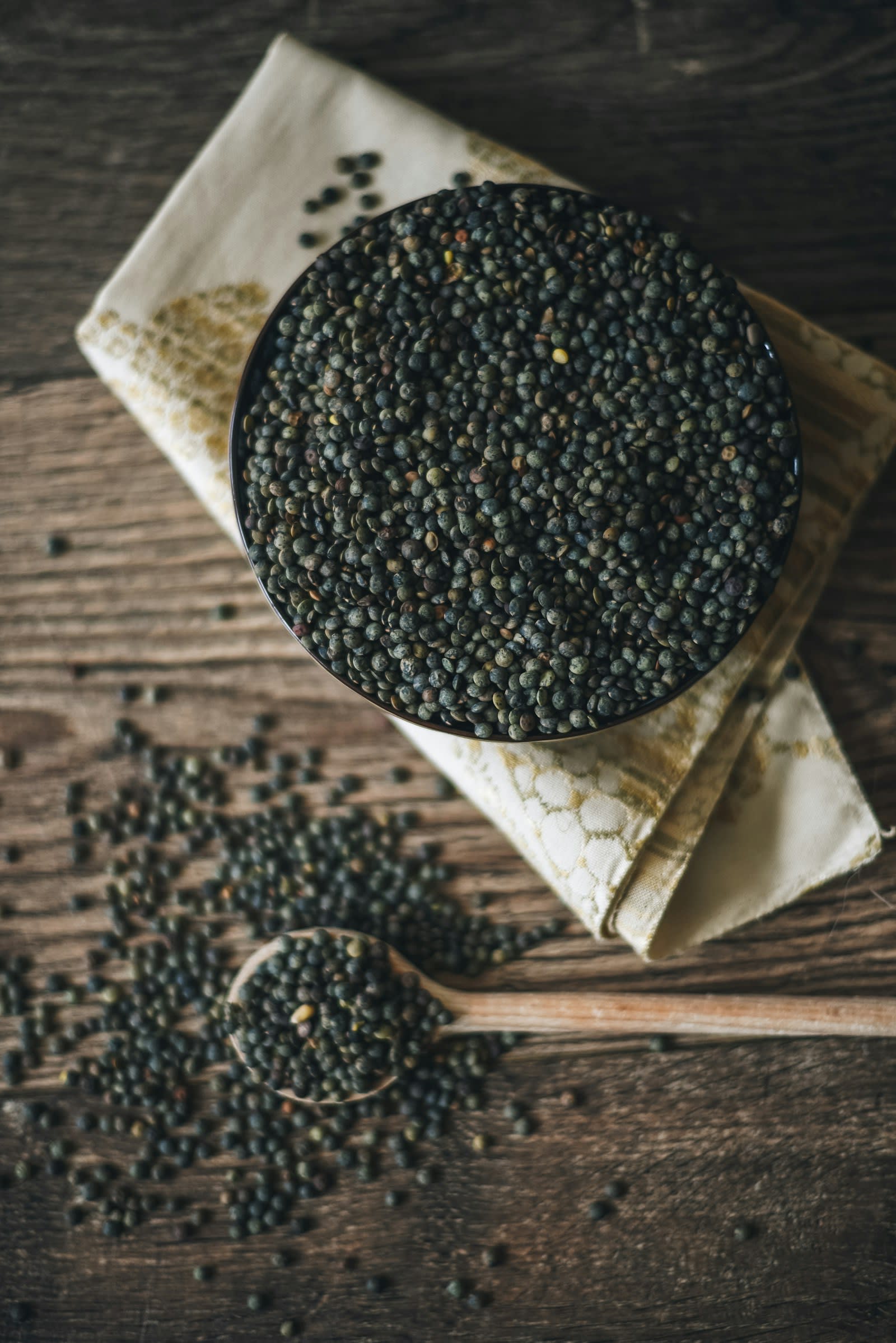
| Lentils, cooked | 1 cup (198 g) | 18 g |
| Chickpeas, cooked | 1 cup (164 g) | 14 to 15 g |
| Edamame, shelled | 1 cup (155 g) | 18 g |
| Firm tofu | 100 g | 12 to 17 g |
| Peanut butter | 2 tablespoons (32 g) | 7 to 8 g |
| Almonds | 28 g (about 23 nuts) | 6 g |
| Whole-wheat bread | 1 slice | 3 to 5 g |
The food that carries the protein matters as much as the grams. Fish, poultry, beans, lentils, nuts and soy come with a better overall package than red and processed meat, which are linked with higher rates of heart disease and bowel cancer. If you eat mostly plants, mixing sources over the day, such as beans with rice, covers all the essential amino acids.
Is too much protein bad for you?
For healthy adults, there is no official upper limit for protein, because studies have not shown clear harm at the intakes most people reach. Intakes up to about 2 g/kg a day appear safe in healthy adults in studies lasting months to a couple of years. Data on decades of very high intake are much thinner.
There are still a few real concerns:
- Kidneys. A high protein intake makes the kidneys filter more. In healthy kidneys this has not been shown to cause damage. In chronic kidney disease, though, extra protein may speed up the decline, and doctors often advise a moderate intake instead. People on dialysis are the exception and usually need more protein, not less.
- Hidden kidney disease. Roughly 1 in 7 US adults has chronic kidney disease, and most of them do not know it. Diabetes and high blood pressure are the biggest risk factors.
- Kidney stones. Large amounts of animal protein can raise the risk of some stones in people prone to them.
- What gets pushed out. Very high-protein, low-carb eating can leave little room for fiber-rich foods, which can mean constipation.
An older worry that protein weakens bones has not held up when calcium intake is adequate.
When should you see a doctor?
Talk to a doctor or a registered dietitian before raising your protein intake if you have chronic kidney disease, diabetes or high blood pressure, a history of kidney stones, gout, or liver disease, where the right amount depends on the stage. The same goes if you are pregnant, have had weight-loss surgery, or take medicine for diabetes and plan to switch to a high-protein, low-carb diet, since cutting carbs can cause low blood sugar with some of those drugs.
Get checked if you notice any of these:
- Swelling in your ankles, legs or around your eyes
- Foamy urine, or a clear change in how much or how often you urinate
- Unexplained weight loss or loss of muscle
- Ongoing tiredness, weakness or frequent infections
- Thinning hair and brittle nails alongside a poor appetite
True protein deficiency is uncommon in high-income countries, but it does occur in older adults who eat very little and in people with eating disorders.
Frequently asked questions
Can you get enough protein on a vegetarian or vegan diet?
Yes. Beans, lentils, tofu, tempeh, edamame, nuts, seeds and whole grains can cover your needs if you eat enough of them across the day. Plant protein is slightly less digestible than animal protein, so some dietitians suggest vegans aim a little above the standard target.
Do you need protein powder?
Most people do not. Food can cover even an athlete's needs. Powders are a convenience, and in the US they are sold as dietary supplements, which the FDA does not review for safety or quality before they go on sale.
Does eating more protein help with weight loss?
It can help a little. Protein keeps you fuller than the same calories from carbohydrate or fat and helps preserve muscle while you lose weight. Total calories still decide whether the scale moves.
Does the body store extra protein?
Not in the way it stores fat or carbohydrate. Amino acids your body does not need right away are broken down and used for energy or stored as fat, which is why a steady daily intake matters.
References
- Protein, Harvard T.H. Chan School of Public Health
- Dietary Proteins, MedlinePlus
- Healthy Eating for Adults with Chronic Kidney Disease, NIDDK
- Healthy Meal Planning: Tips for Older Adults, National Institute on Aging
This article is general information, not medical advice. Check with a doctor before changing your diet, exercise or supplements. Read our medical disclaimer.

Comments
No comments yet. Questions and experiences are welcome.
Leave a comment
Your email is never published. Comments appear after a quick moderation check.