
Is Creatine Safe? Benefits, Side Effects and How to Take It
Creatine is one of the best studied sports supplements. What it does for strength, how much to take, why the scale goes up, what it means for your kidneys and who should avoid it.
By Daniel Hayes · Oct 31, 2026 · 7 min read · 5 sources cited
Key takeaways
- 1In healthy adults, 3 to 5 grams of creatine a day has a strong safety record in studies lasting up to several years.
- 2Combined with resistance training, creatine adds modest extra gains in strength and lean mass, but does little for endurance exercise.
- 3Expect 1 to 2 kg of water weight in the first weeks; a loading phase is optional and only fills muscles faster.
- 4Creatine can raise blood creatinine without harming the kidneys, but people with kidney disease should avoid it unless a doctor approves.
- 5Women and men use the same dose; pregnant or breastfeeding women and teenagers should skip it.
Yes, for most healthy adults creatine is safe at the usual dose of 3 to 5 grams a day. It is one of the most studied sports supplements, with trials lasting from weeks to several years showing no harm to the kidneys or liver in healthy people. The main side effects are a gain of 1 to 2 kilograms (2 to 4 pounds) of water weight and stomach upset at large doses, but people with kidney disease should avoid it unless their doctor agrees.
What is creatine and what does it do?
Creatine is a compound your body already makes, mainly in the liver and kidneys, from three amino acids. You make about 1 gram a day, and if you eat meat and fish you get roughly another 1 to 2 grams from food. A pound (450 g) of raw beef or salmon contains about 2 grams. About 95% of the creatine in your body is stored in your muscles.
Muscles use it as a fast backup energy supply. During a short, hard effort, like a heavy set of squats, a sprint for the bus or a jump, your muscles burn through their immediate fuel in seconds. Stored creatine (as phosphocreatine) helps rebuild that fuel quickly. Supplements raise muscle stores by roughly 20% to 40% in many people, so there is more of this backup on hand.
It does not act like a hormone and it is not a steroid. It also does very little for long, steady exercise such as distance running, which runs mainly on other fuel systems.
Does creatine actually work for strength and muscle?
For short, intense exercise, the evidence is strong. Hundreds of studies, mostly using creatine monohydrate, show that people who take creatine while doing resistance training gain more strength and more lean mass, on average, than people who train the same way with a placebo. It also helps with repeated bursts, such as interval sprints or sports with lots of stop-start effort.
A few things temper the picture:
- The extra gains are real but modest. Creatine adds to what training does. It does not replace training.
- Not everyone responds. People who already have high muscle creatine, often heavy meat eaters, may notice little change. Vegetarians and vegans, who start lower, tend to respond more.
- Some of the early weight gain is water, not new muscle. Over months of training, part of the extra gain is lean tissue.
- Benefits for endurance sports are small or absent.
Creatine monohydrate is the form used in nearly all the research. Other forms are often marketed as better absorbed, but there is little good evidence that they outperform monohydrate.
How much creatine should you take a day?
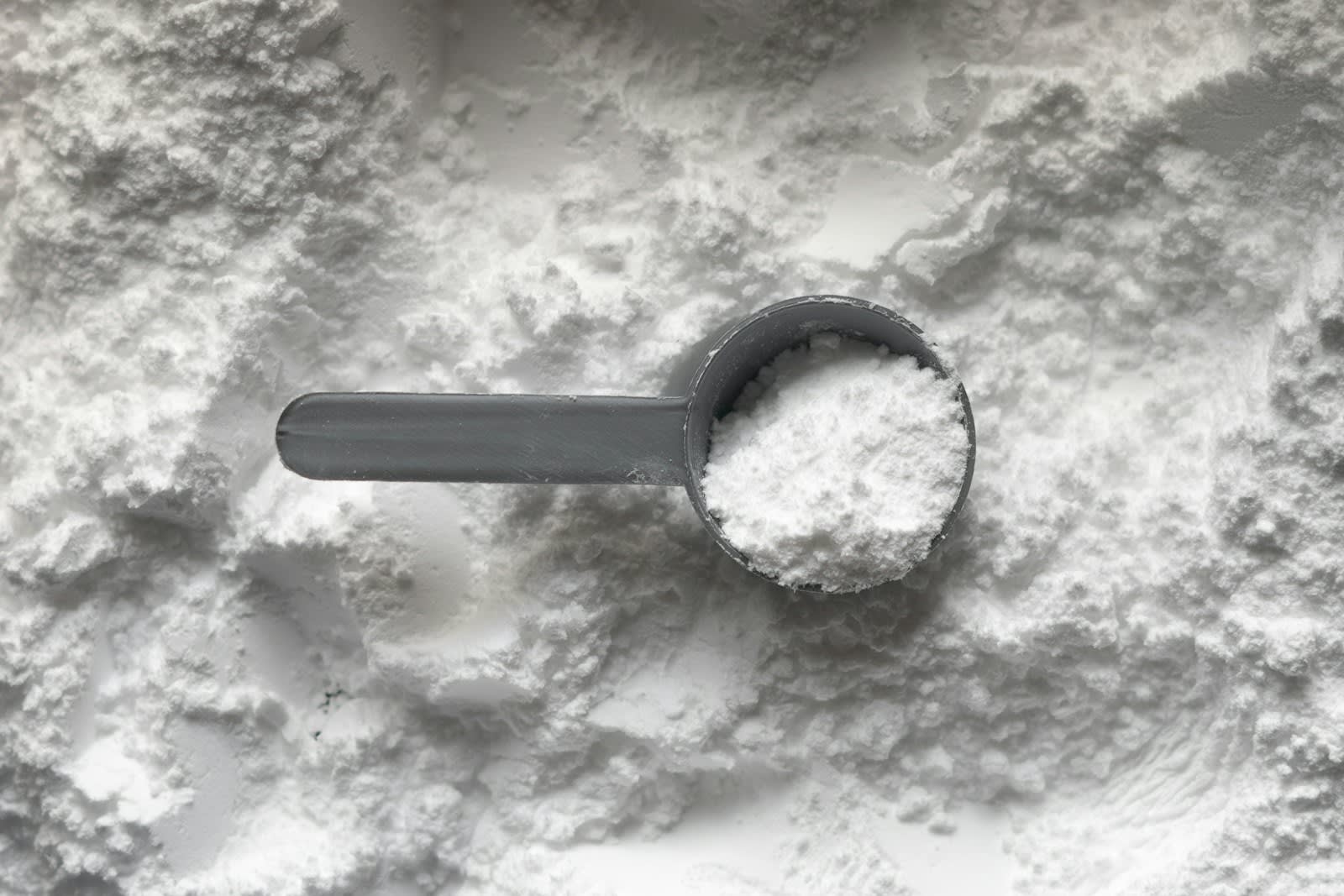
The standard dose is 3 to 5 grams a day, roughly a level teaspoon of powder. Taken daily, that fills muscle stores in about three to four weeks.
A loading phase is optional. Some people take about 20 grams a day, split into four doses of 5 grams, for five to seven days, then drop to 3 to 5 grams. Loading fills the muscles in about a week rather than a month, but the end point is the same. It also makes stomach upset and quick water weight gain more likely, so for most people the slower route is simpler.
Timing does not matter much. Some studies hint at a small edge from taking it around a workout, but consistency matters far more. Mixing it into a drink with a meal is an easy habit, and food may help with absorption. Powder dissolves better in warm liquid. If you stop, muscle stores return to normal over about four to six weeks.
Does creatine cause water weight or bloating?
Most people gain about 1 to 2 kg (2 to 4 lb) in the first week or two, especially with loading. Creatine pulls water into muscle cells, so the extra water sits mostly inside the muscle rather than under the skin. Many people do not notice bloating at all, but the scale will move. That matters if you compete in a weight class or are tracking body weight closely.
Other reported side effects are mostly digestive: stomach cramps, nausea or loose stools, usually with large single doses. Splitting the dose or taking it with food tends to fix this. Older claims that creatine causes muscle cramps, dehydration or heat illness have not held up in controlled studies.
You may also have heard that creatine causes hair loss. That idea traces back to one small study in young male rugby players that found a rise in a hormone linked to male-pattern baldness. It did not measure hair loss, and the finding has not been confirmed. The evidence is too thin to say creatine causes hair loss, but also too thin to rule it out completely.
Is creatine bad for your kidneys?
In healthy people, research does not support this worry. Studies lasting up to several years in healthy adults taking normal doses have not shown damage to kidney function.
The confusion comes partly from blood tests. Your body breaks creatine down into creatinine, and doctors use blood creatinine to estimate how well your kidneys filter. Taking creatine can raise that number a little without any real change in kidney health, which can make results look worse than they are. If you take creatine, tell your doctor before routine blood work so the result is read correctly.
People who already have kidney disease are a different group. There is very little safety research in them, and a few case reports describe kidney problems in people taking creatine. Medical advice is to avoid it if you have kidney disease, or are at higher risk of it, for example from diabetes or high blood pressure, unless your doctor approves.
Is creatine safe for older adults and for women?
Muscle mass and strength drop with age, and creatine has drawn interest as a way to slow that. Several trials in adults over 50 found that creatine combined with resistance training led to somewhat greater gains in strength and lean mass than training alone. Results are mixed, though, many studies were short, and creatine without exercise does not seem to do much. Older adults are also more likely to have reduced kidney function or take several medicines, so a talk with a doctor first makes sense.
Creatine works the same way in women and men, and the usual 3 to 5 gram dose applies to both. Women are underrepresented in the research, so the evidence base is smaller, but studies so far show similar benefits for strength and power and a similar safety profile. Water weight gain may be smaller in some women. Research on creatine and mood or brain health is at an early stage and too limited to draw conclusions.
Two groups should hold off. There is not enough safety data on creatine during pregnancy or breastfeeding. Teenagers under 18 are generally advised not to use performance supplements, since diet and training cover their needs.
When should you see a doctor?
Talk to a doctor or pharmacist before starting creatine if you:
- have kidney disease, a single kidney or a history of kidney problems;
- have diabetes or high blood pressure;
- take medicines that can affect the kidneys, such as regular high-dose anti-inflammatory painkillers, certain diuretics or some immune-suppressing drugs;
- have liver disease or bipolar disorder (a few reports link creatine with manic episodes);
- are pregnant, breastfeeding or under 18.
Stop taking it and get medical advice if you notice swelling in your legs or ankles, much less urine than usual, foamy or dark urine, ongoing nausea or vomiting, or unusual tiredness. Get urgent help for severe muscle pain with dark, cola-colored urine, especially after very hard exercise.
Supplements are not reviewed for safety or effectiveness before they are sold, and some sports products have been found to contain ingredients not listed on the label. Products that combine creatine with stimulants or other compounds carry their own risks.
Frequently asked questions
Do you need to cycle off creatine?
There is no clear evidence that taking breaks is necessary. Your body does not stop making its own creatine in a lasting way, and production returns to normal after you stop. Many people take it continuously at 3 to 5 grams a day.
Can you take creatine with coffee?
Probably, yes. A few older studies suggested caffeine might blunt creatine's effect, but later research has been mixed. A normal cup or two a day is unlikely to make a meaningful difference.
Should you take creatine on rest days?
Yes. The aim is to keep muscle stores full, which depends on steady daily intake, not on when you train. Take your usual dose at any convenient time.
Can creatine help if you do not lift weights?
Benefits show up mainly in people doing short, intense exercise. If you are not training, there is little evidence that creatine will build muscle or improve fitness on its own.
References
- Creatinine Test: MedlinePlus Medical Test, MedlinePlus
- What Is Chronic Kidney Disease in Adults?, NIDDK
- Dietary Supplements for Older Adults, National Institute on Aging
- Using Dietary Supplements Wisely, NCCIH
- Dietary Supplements, FDA
This article is general information, not medical advice. Check with a doctor before changing your diet, exercise or supplements. Read our medical disclaimer.

Comments
No comments yet. Questions and experiences are welcome.
Leave a comment
Your email is never published. Comments appear after a quick moderation check.